Complete LED Chip Solutions
We provide LED chips from low power to high power, covering UV to IR wavelengths. These chips are ideal for horticulture lighting, therapy lighting, and general illumination applications.
With a full range of SMD LEDs, COB LEDs, and LED modules, lighting companies can find solutions that combine high efficiency, durability, and precise light output.
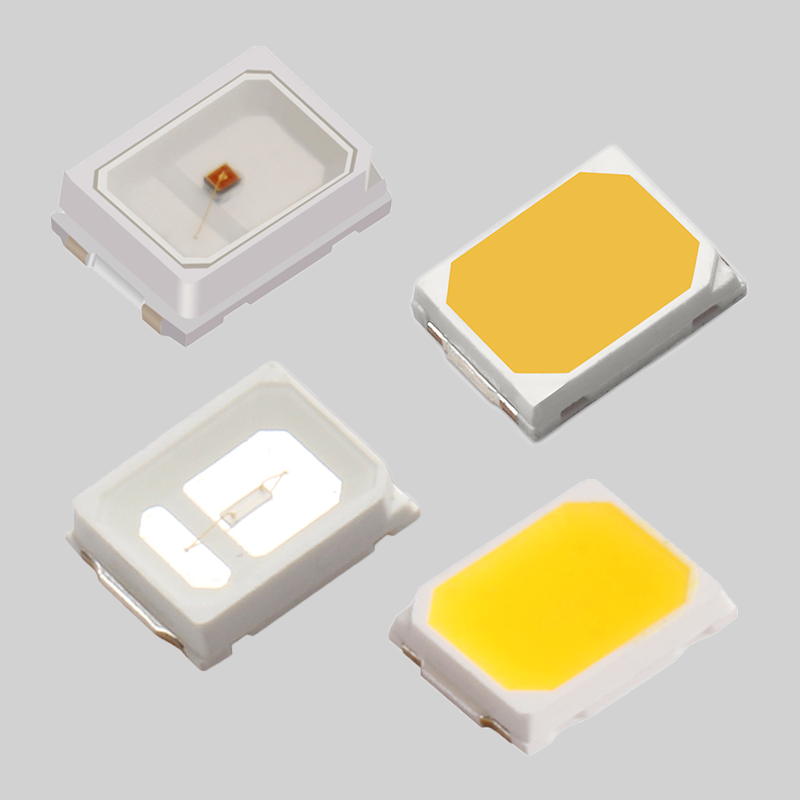
SMD LEDs
COB LEDs
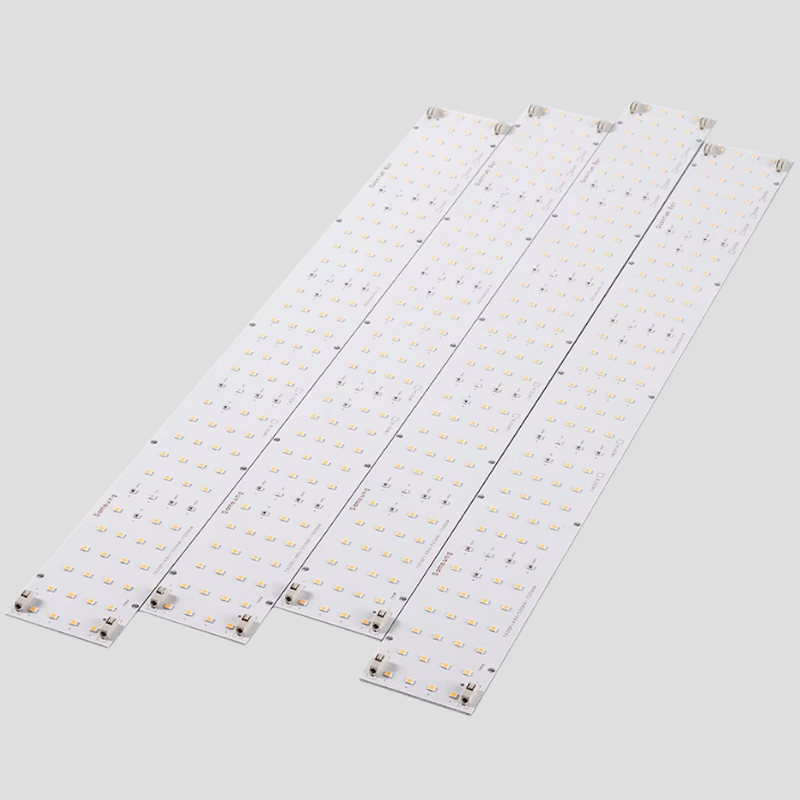
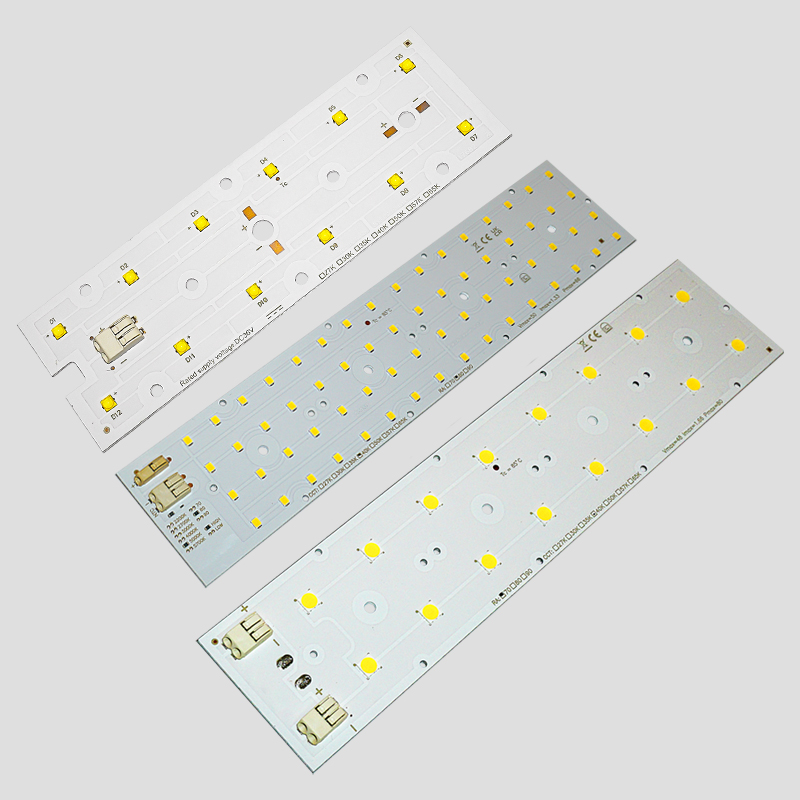
LED Modules
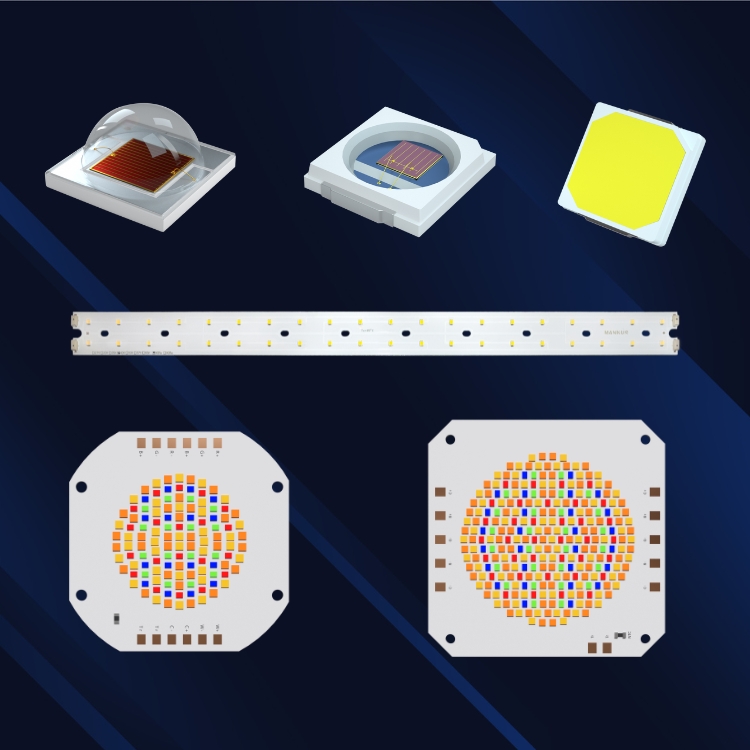
Products Overview
SMD LED
LED Module
LEDs For Outdoor Lighting
Horticulture LED
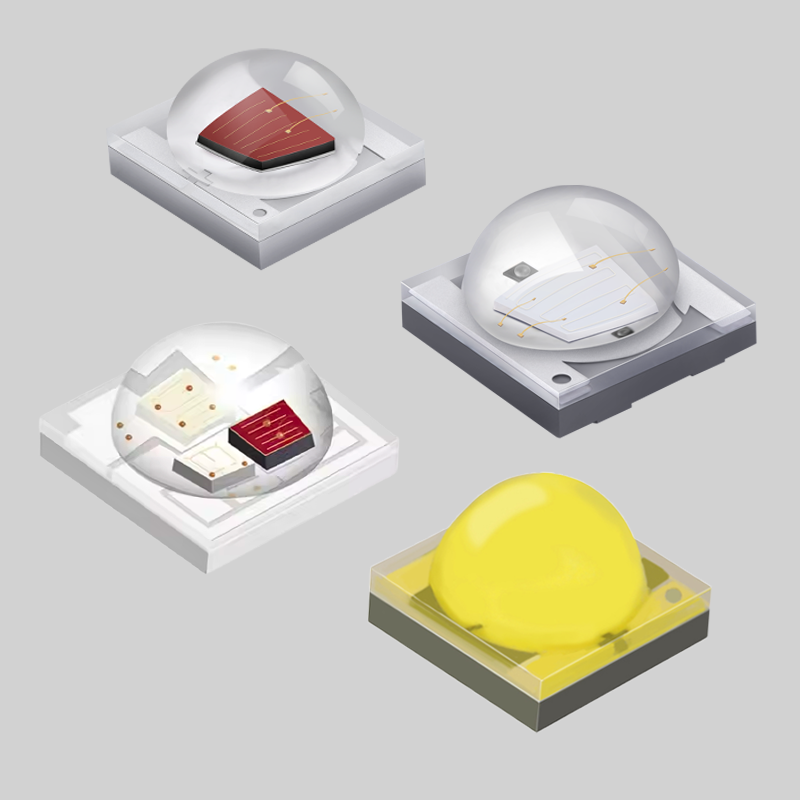
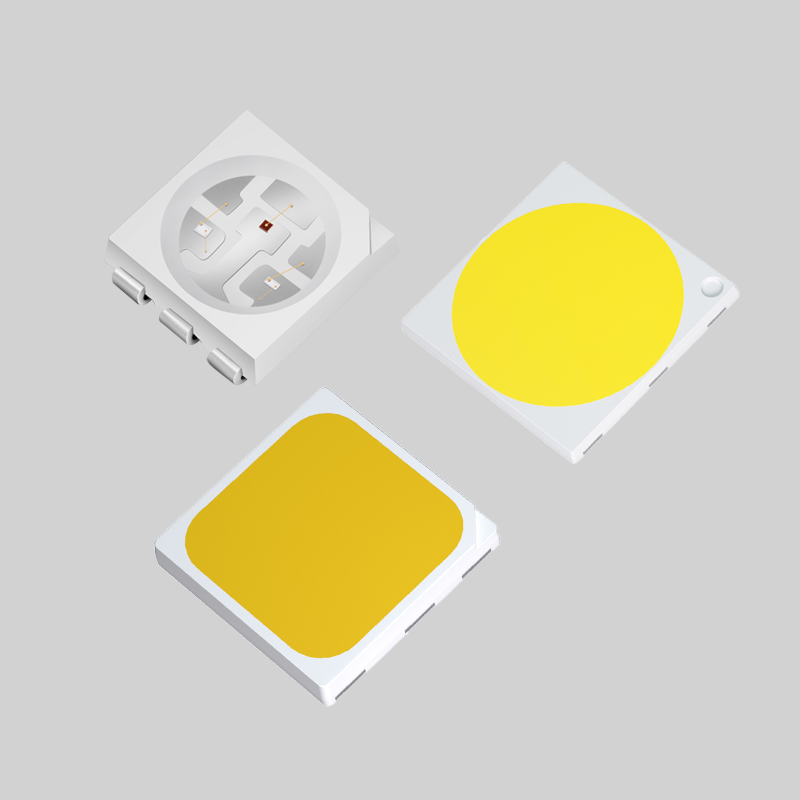
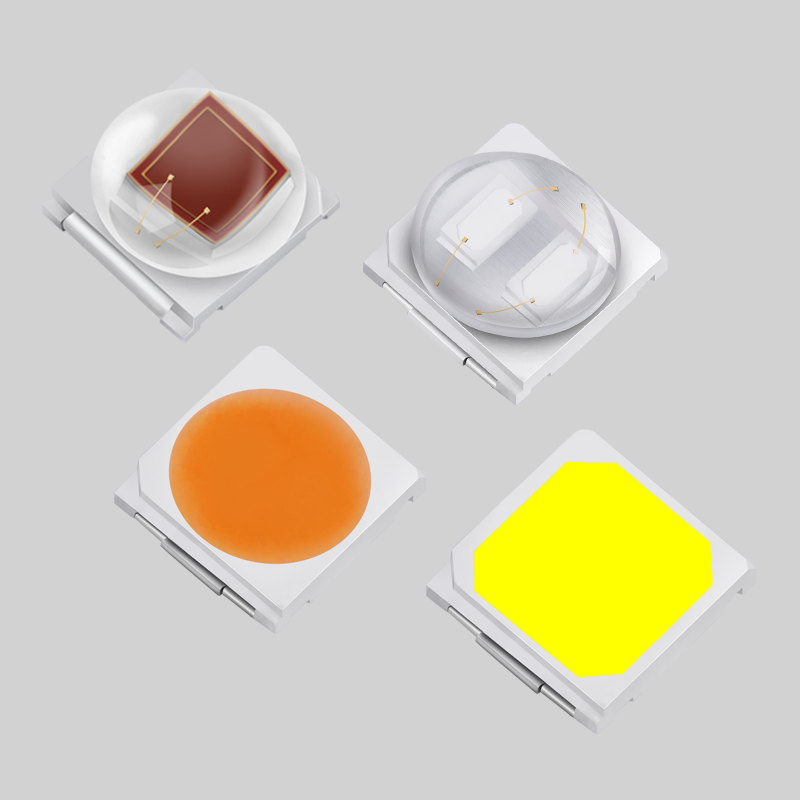
LED Chip Solutions for Different Lighting Applications
We provide application-oriented LED chip solutions based on brightness, wavelength, power, voltage, thermal design and optical requirements.
Outdoor Lighting
3030 / 3535 / COB LEDs for street lights, flood lights, tunnel lights and stadium lighting.
View SolutionCommercial Lighting
2835 / 3030 LEDs with high efficiency, high CRI and stable color consistency.
View SolutionHorticulture Lighting
Custom spectrum LEDs from UV to IR for plant growth, greenhouse and vertical farming.
View SolutionStage Lighting
3535 / 5050 RGB, RGBW and high-power LEDs for colorful and dynamic stage effects.
View SolutionAutomotive Lighting
Reliable LED chips for signal lighting, interior lighting and automotive auxiliary lighting.
View Solution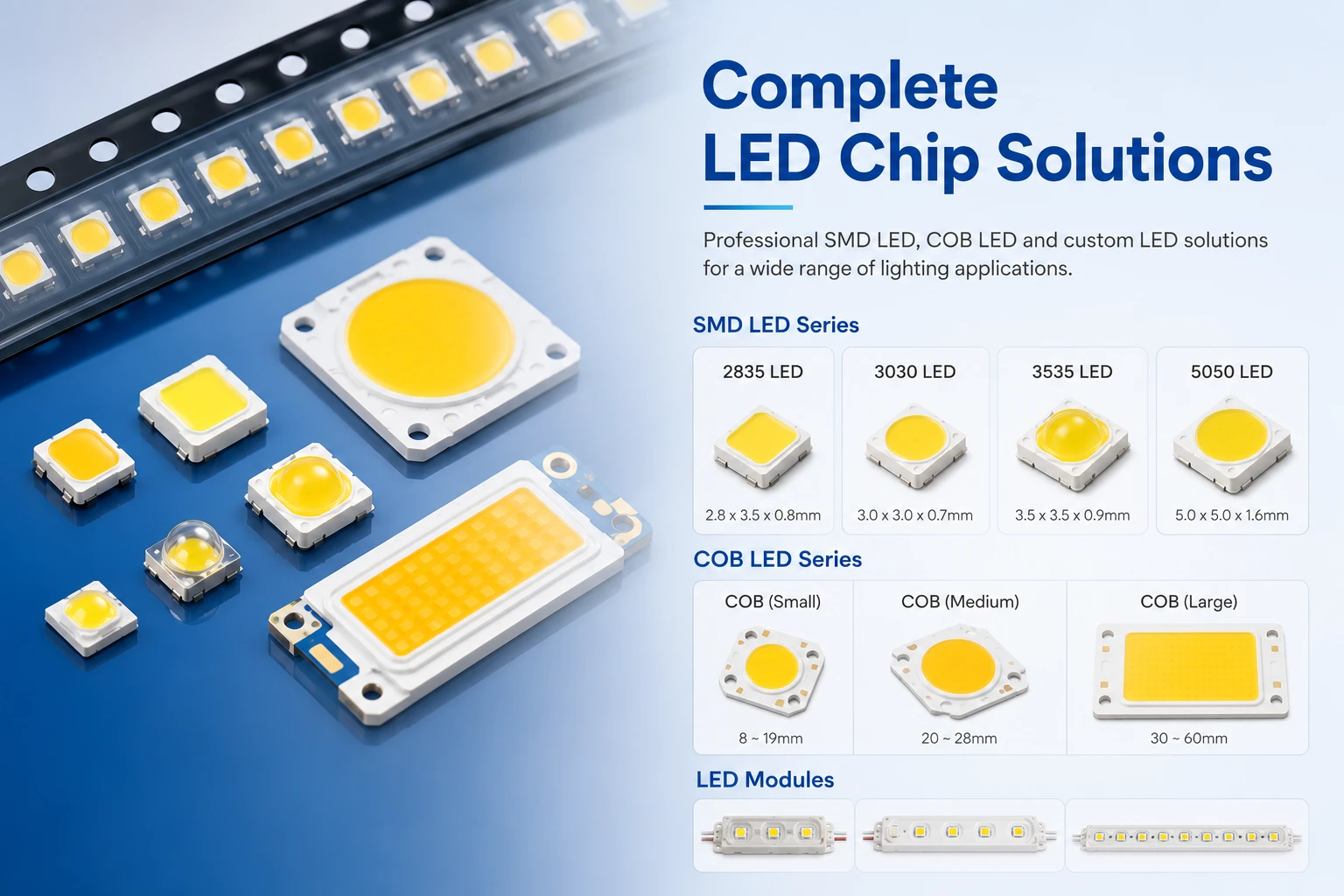
Key Advantages
Professional LED chip solutions covering SMD LEDs, COB LEDs, and custom LED modules for diverse lighting applications.
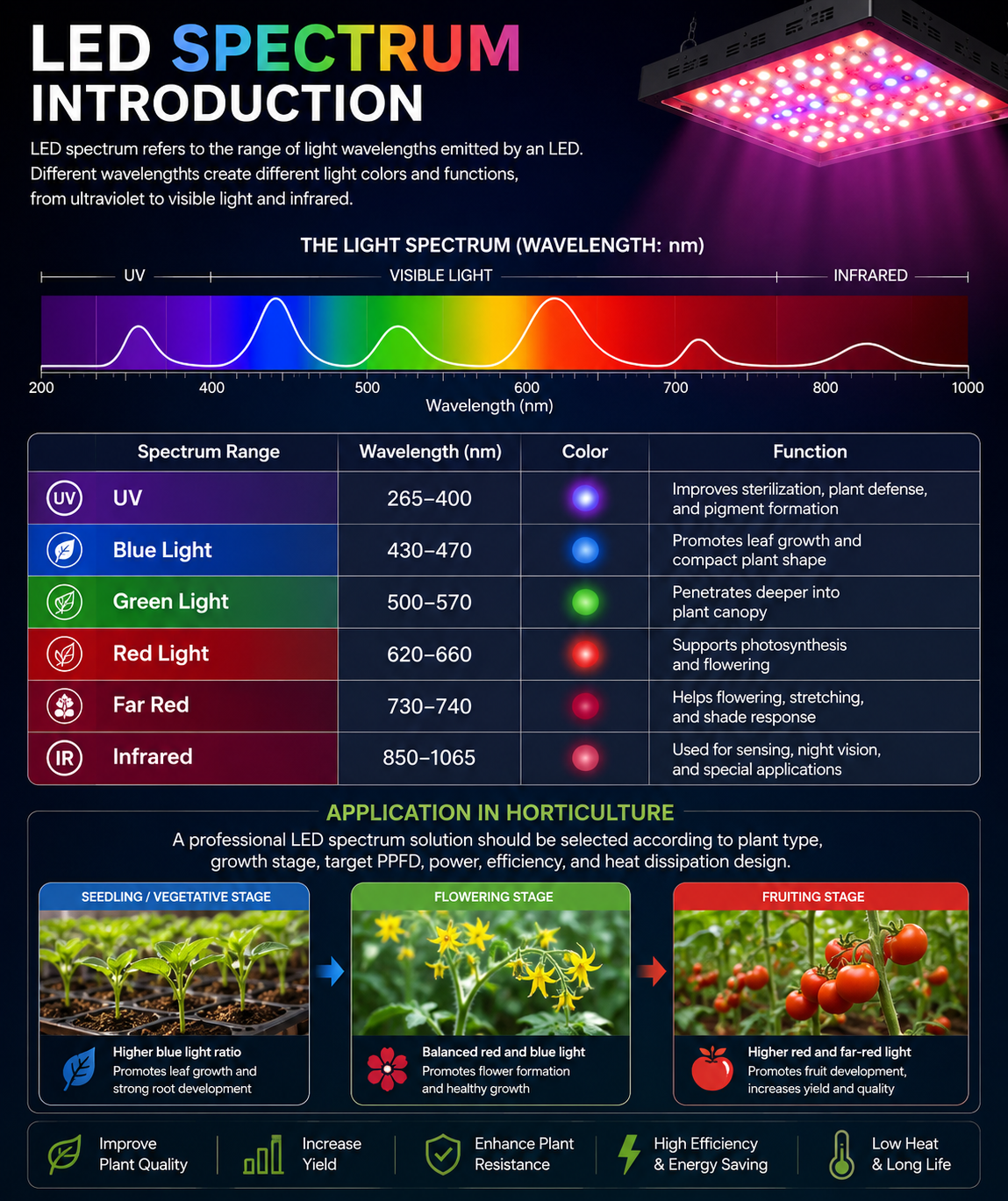
LED Spectrum Introduction
Full LED Spectrum Range
UV (Ultraviolet): ~200–400 nm Used for sterilization, curing, and medical applications.
Visible light: ~400–700 nm This is what the human eye can see.
IR (Infrared): ~700–1100+ nm Used for sensing, remote control, heating, and some industrial uses.
Visible Light LED Spectrum
Within visible light, LEDs are commonly engineered to emit specific wavelengths:
Violet / Blue (400–470 nm): High-energy light, often used in white LED excitation and plant growth.
Cyan / Green (470–570 nm): Important for human eye sensitivity and balanced lighting.
Yellow / Amber (570–600 nm): Warm tone, used in signaling and warm white LEDs.
Red (600–700 nm): Strong in plant photosynthesis and signaling.
Deep Red (660 nm): Especially important for plant flowering and growth.
Far Red (730 nm): Influences plant photoperiod response.
Contact Us
We Want To Hear From You